
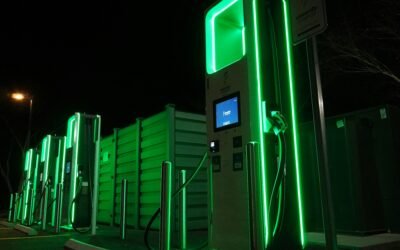


There is a slightly rude thing about electric cars nobody really explains at the showroom: your big expensive battery can be sitting there at 80%, totally fine, and the car can still act completely dead because of a much smaller battery.
Yep. The little low-voltage battery. Usually called the 12V battery, even though some newer cars use a different setup. It is not the one that gives you 300 km of range. It is the one doing the quiet boring work in the background — locks, lights, screens, modules, and the stuff that helps the car wake up properly.
An EV normally has two electrical worlds: a big high-voltage traction battery for driving, and a much smaller low-voltage battery for accessories and control systems. A problem with the small one can make the whole car feel very, very dead.
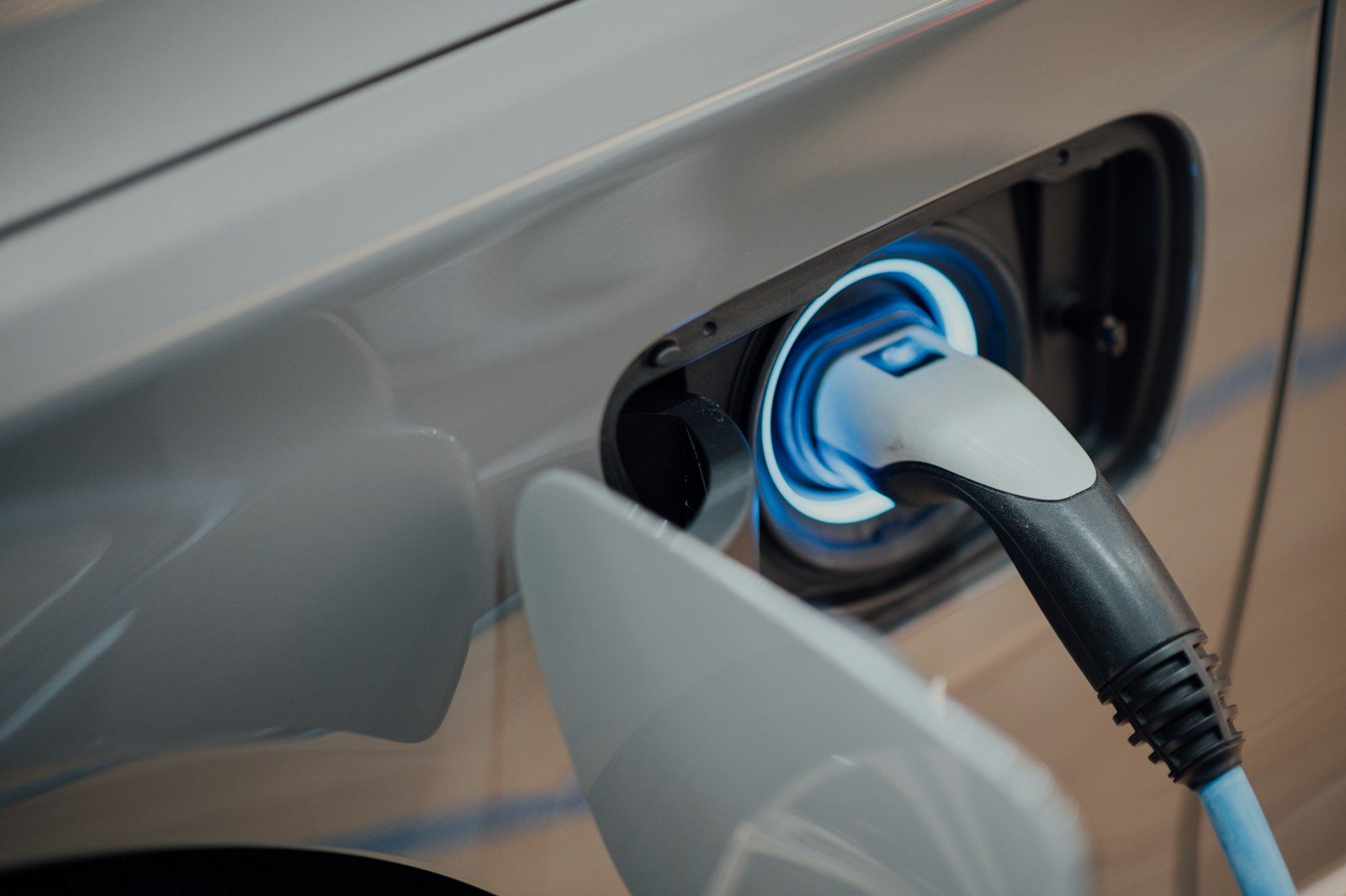
Wait, why does an EV even need a 12V battery?
Because car electronics have been built around low-voltage power for a very long time. Your EV still has a pile of regular car stuff: interior lights, alarms, central locking, displays, sensors, safety modules and a lot of computers talking to each other.
The U.S. Department of Energy explains that an EV’s auxiliary battery supplies power for vehicle accessories. It also explains that a DC/DC converter steps power down from the high-voltage traction pack to run those accessories and recharge the auxiliary battery. So no, there is no normal alternator hiding somewhere in your EV. The car uses electronics to manage this little battery instead.
People call it a “12V battery” because that is still the familiar name. But not every EV has the exact same chemistry, voltage or layout. Your owner manual wins here, always.
What a weak low-voltage battery can look like
The annoying bit is that it does not always announce itself in a dramatic way. Sometimes the app will not connect. Sometimes the doors unlock slowly. Sometimes screens flash, warnings stack up like a Christmas tree, or the car refuses to go into Ready even though the range display looked healthy yesterday.
And yes, it can happen at the worst possible moment. You come back from shopping, press the handle, and the car behaves like it has taken the day off. That does not automatically mean your main battery is ruined. It might be a tired low-voltage battery, a charging-system fault, or something else the car needs diagnosed.
| What you notice | Could it be the small battery? | Best next move |
|---|---|---|
| Key/app will not wake the car | Possibly — but check your key, phone and vehicle alerts too | Use the manual key procedure in your owner manual and check for messages |
| Random electrical warnings or flickering screens | It can be one possible cause | Take screenshots, note the time, then arrange a proper check |
| Car will not enter Ready / drive mode | Possible, but not something to guess at | Call roadside assistance or the manufacturer support line |
| A low-voltage battery warning keeps returning | Very worth investigating | Book service; the battery and the charging system may both need checking |
Why these batteries get weak
Sometimes it is just age. Small batteries wear out too, even when the big traction battery is doing great. Sometimes the car has been sitting for a while. Sometimes there is a software or charging-system issue. And sometimes a low-voltage battery has one bad cell and just decides it is done with life. Batteries are moody little things.
Do not make the mistake of treating every warning like a battery-health crisis. Your EV’s big pack and its low-voltage battery are different systems. That is also why a normal-looking range estimate does not prove that every electrical part of the car is happy. For the bigger battery side of things, read our no-panic guide to EV battery health and charging habits.
Low-voltage battery common sense
- Do: save warning messages and book service if they keep coming back.
- Do: use the vehicle-specific jump-start or recovery instructions in your manual.
- Do not: touch orange high-voltage cables, covers or connectors.
- Do not: assume a full traction battery means the car is safe to keep driving with warnings.
Can you jump-start an EV?
Sometimes, yes — but this is where “just do it like a normal car” gets people in trouble. Many EVs have dedicated low-voltage jump terminals or a specific emergency procedure. Some have clear rules about whether the vehicle can help jump another car. Others do not want you improvising at all.
So the useful answer is: follow your own manual, not a random video that happens to show a different car. You should never try to jump, open or work on the high-voltage battery system. If you are stuck, roadside assistance is boring but pretty sensible.
A very small checklist worth keeping
- Know where your manual key is and how to use it.
- Save your manufacturer’s roadside-assistance number before you need it.
- Do not ignore a repeating low-voltage or electrical-system warning.
- Before a long trip, check that your car has no active service alerts and your charging plan has a bit of buffer.
- Keep your focus on the problem in front of you — a tyre, charging, or 12V issue can all make range planning feel worse than it really is.
For that last bit, our post on tyre pressure and EV range is worth a look. It is surprisingly easy to blame the big battery for something much more boring.
Quick FAQ
Does every EV have a 12V battery?
Most EVs have a separate low-voltage battery or low-voltage energy system, but the exact voltage, chemistry and location vary by model. Check your manual before buying a replacement or trying any emergency procedure.
Can a small battery really stop an EV from starting?
It can stop the low-voltage electronics from waking the car normally, even when the traction battery has charge. The exact symptoms depend on the vehicle, which is why a persistent alert should be diagnosed rather than guessed at.
Does plugging in fix a weak 12V battery?
Not necessarily. Your EV may manage the auxiliary battery from the traction pack, but a weak battery or fault needs model-specific advice and possibly service. Do not assume overnight charging is a guaranteed fix.
Did you know your EV had a separate low-voltage battery?
This is a conversation prompt, not a live vote counter. Drop a comment: “yes, I knew,” “sort of,” or “well… I do now.”
Source note: The explanation of EV auxiliary batteries and DC/DC converters is based on the U.S. Department of Energy’s Alternative Fuels Data Center guide to all-electric vehicle components. For your exact warning messages, jump-start points and service steps, use your manufacturer’s owner manual.
Bottom line: Your big battery is not the only battery that matters. Keep an eye on the small one too. It is not glamorous. It is just the tiny gatekeeper that can decide whether your EV wakes up at all.