



The first time you lift off the accelerator in a strong-regeneration EV, it can feel a bit weird. The car slows down harder than your old petrol car ever did, the energy screen starts showing green arrows, and suddenly you are thinking: Wait… am I charging the car by not pressing anything?
Kind of, yes. But also not in the magical “infinite range” way some people imagine. Regenerative braking is useful, clever and honestly pretty satisfying once you get used to it. It is also very easy to misunderstand.
Here is the no-hype version: your EV can slow itself by using the drive motor as a generator, sending some energy back toward the battery instead of turning all that motion into heat at the brake discs. The U.S. Department of Energy notes that some EVs use motor-generators that handle both driving and regeneration. Nice. But your normal friction brakes are still very much part of the car, and still matter a lot.
Regenerative braking recovers a bit of energy while slowing down. It can make city driving smoother and may reduce how much the regular brakes are used. It does not make an EV self-charging, and it is not a reason to forget brake maintenance.

So what is regenerative braking actually doing?
When you are accelerating, the electric motor takes energy from the battery and turns the wheels. When you lift off the accelerator or brake gently, that same motor can reverse its job. Instead of mainly pushing the car forward, it resists the wheels and creates electricity.
The car uses that resistance to slow down. Some of the energy that would normally disappear as heat during braking is recovered. That is especially handy in stop-start driving, downhill sections and those annoying city routes where the next red light always appears ten seconds early.
It is still not free energy. You only get back a portion of what it took to get the car moving in the first place, because real life has tyre resistance, air resistance, heat and a bunch of other boring physics happening. Think of regen as a small refund, not a cashback miracle.
| Driving situation | What regen can feel like | What to remember |
|---|---|---|
| Slow city traffic | Very useful; frequent lift-offs recover some energy and slow the car smoothly | Leave room ahead and learn the car’s lift-off response |
| Motorway cruising | Usually less dramatic because you are not slowing down much | Speed and wind matter more for range here |
| Long downhill stretch | Can hold speed nicely and put some energy back | Do not assume it will feel identical when the battery is cold or nearly full |
| Hard stop or surprise hazard | Normal brakes and safety systems step in as needed | Use the brake pedal. No prizes for trying to regen your way through an emergency. |
One-pedal driving: helpful, not a driving exam
One-pedal driving is basically the stronger version of this. Lift off the accelerator and the car slows much more aggressively than it would in a normal coasting car. On many EVs, once you learn it, you can handle loads of everyday traffic without moving your right foot to the brake pedal every few seconds.
People either love it immediately or spend the first day saying, “Why is the car braking by itself?” Both reactions are normal. The trick is not to stare at the energy meter. Just look farther ahead, ease off earlier, and give yourself a few quiet drives to learn the timing.
But please do not treat it like a superpower. One-pedal behaviour varies by car, drive mode, temperature and battery condition. Some models can come to a full stop in their one-pedal mode, some creep, and some change their response depending on settings. Your owner manual wins here, every time.
Why regen sometimes feels weaker
You may notice that lifting off the accelerator does not always slow the car with exactly the same strength. That is not automatically a fault. An EV has to manage what the battery can comfortably accept at that moment, so strong regeneration may be reduced when the battery is very cold or already close to full.
This is also why a dashboard range number can feel a bit moody in winter. Cold weather changes battery behaviour, cabin-energy use and sometimes the amount of regenerative braking available. Our guide on why EV range estimates move around explains that bigger picture without pretending one number can predict every drive.
A nearly full battery can create a similar little surprise. You leave a fast charger at 100%, roll down a hill, lift off, and the usual bite is softer. The car is not broken; it simply has less spare room to put recovered energy. This is one more reason to press the brake pedal whenever the situation needs it, instead of expecting the car to behave exactly like yesterday.
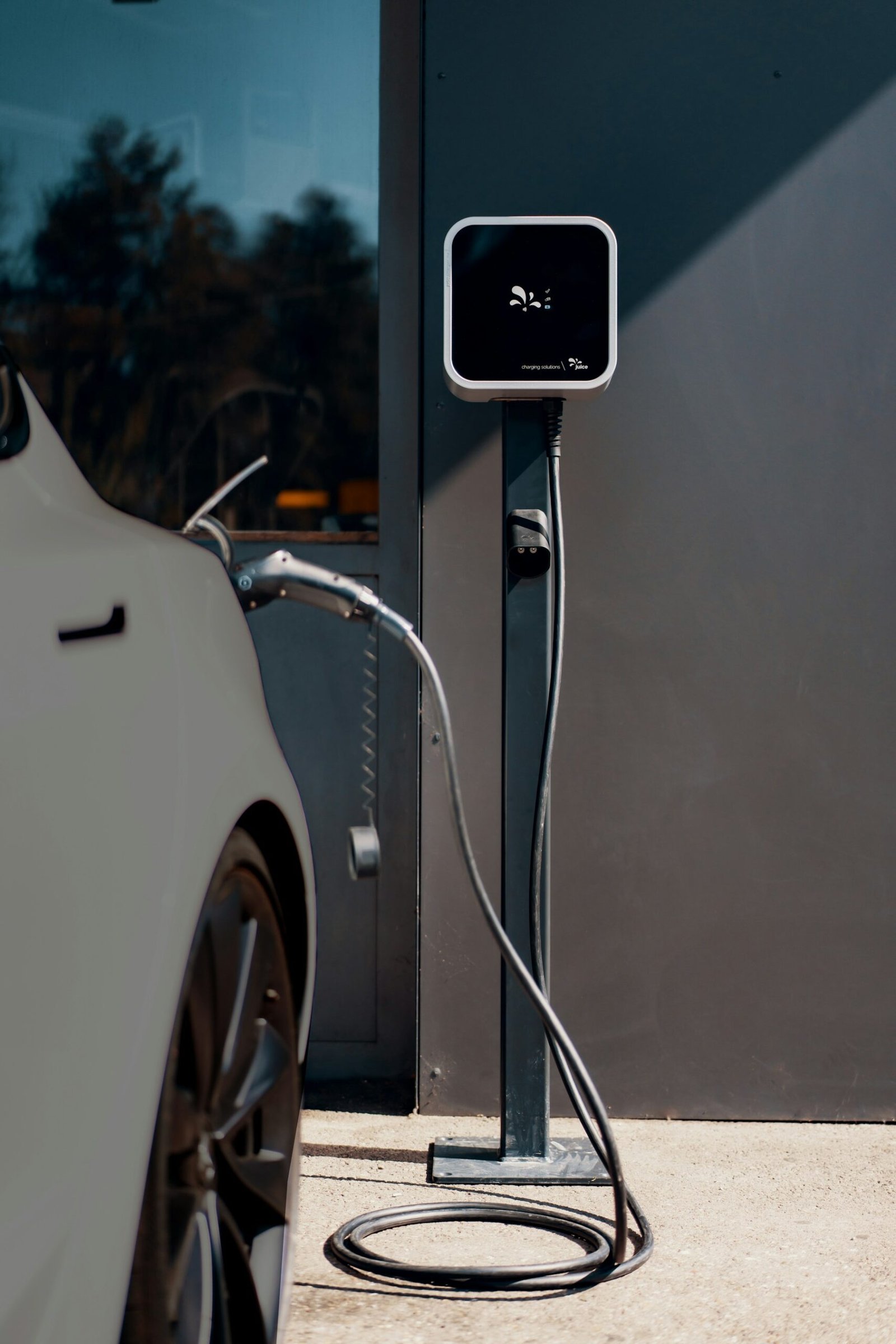
Regenerative braking is not a replacement for watching traffic, using your brake pedal or keeping a safe following distance. If the car feels different than expected, brake normally first and investigate the setting or manual later.
Your EV brakes can last longer — but they are not “maintenance free”
Because regeneration often does some of the slowing, the friction brakes may get less work than they would in an equivalent petrol car. That can be a nice ownership bonus. But “less work” is not the same as “never look at them again.” Pads, discs, calipers, brake fluid and tyres still deserve the service checks your manufacturer lists.
This matters even more if you live somewhere wet, salty or dusty, or if the car mostly does very gentle city miles. Get the braking system inspected at the recommended intervals, and do not ignore grinding, pulling, vibration, a brake warning light or a pedal that feels odd. That is regular-car advice, yes, but EV owners need it too.
While you are doing the boring ownership stuff, add tyre pressure to the same monthly routine. Low tyres quietly affect efficiency and can make range worries feel worse than they really are. Here is our simple EV tyre-pressure and range check.
A calmer way to use regen every day
- Start with the car’s normal or medium regen setting if you are new to it.
- Practice on a route you know well, with plenty of space ahead.
- Lift off earlier than you think, rather than lifting off sharply at the last second.
- Use the brake pedal whenever you need more slowing. That is what it is there for.
- Expect the feel to change a little in cold weather or after charging near full.
- Check your own manual before changing regen modes or assuming one-pedal behaviour is the same as a different EV.
Try this on your way home
- On a clear road, lift off a little earlier than usual and feel the car slow down.
- Watch traffic, not the regen graphic.
- Notice whether the response changes after a recent charge or on a cold morning.
- Keep your usual charging plan sensible; this is a small efficiency tool, not a reason to chase every last watt.
And if charging speeds are the thing confusing you more than regen, this guide on why a 350 kW charger does not always give 350 kW is worth a read.
Quick FAQ
Does regenerative braking fully charge an EV battery?
No. It recovers only part of the energy from slowing down. You still charge the car from a plug or charger as normal.
Can I drive an EV using only one pedal?
In many everyday situations, one-pedal mode can handle much of the slowing. You still need the brake pedal for traffic, hard stops and any moment where more braking is required. Exact behaviour varies by model.
Why is my EV’s lift-off braking weaker after charging?
A battery near full may have less room to accept recovered energy. Temperature and your vehicle’s settings can also change the response. Check your owner manual for the exact behaviour of your EV.
Do you drive with strong regen, low regen, or whatever the default was?
This is a discussion prompt, not a live vote counter. Drop your pick in the comments — and say which EV made you switch settings.
Source note: For the basic EV powertrain explanation, see the U.S. Department of Energy’s Alternative Fuels Data Center guide to all-electric cars. The exact regeneration settings, limits and brake-service schedule for your car should always come from its own owner manual.
Bottom line: Regenerative braking is one of the quieter reasons EVs feel easy in traffic. Learn its rhythm, do not overthink the little energy graph, and keep treating the brake pedal and service schedule like they still exist. Because they do.