

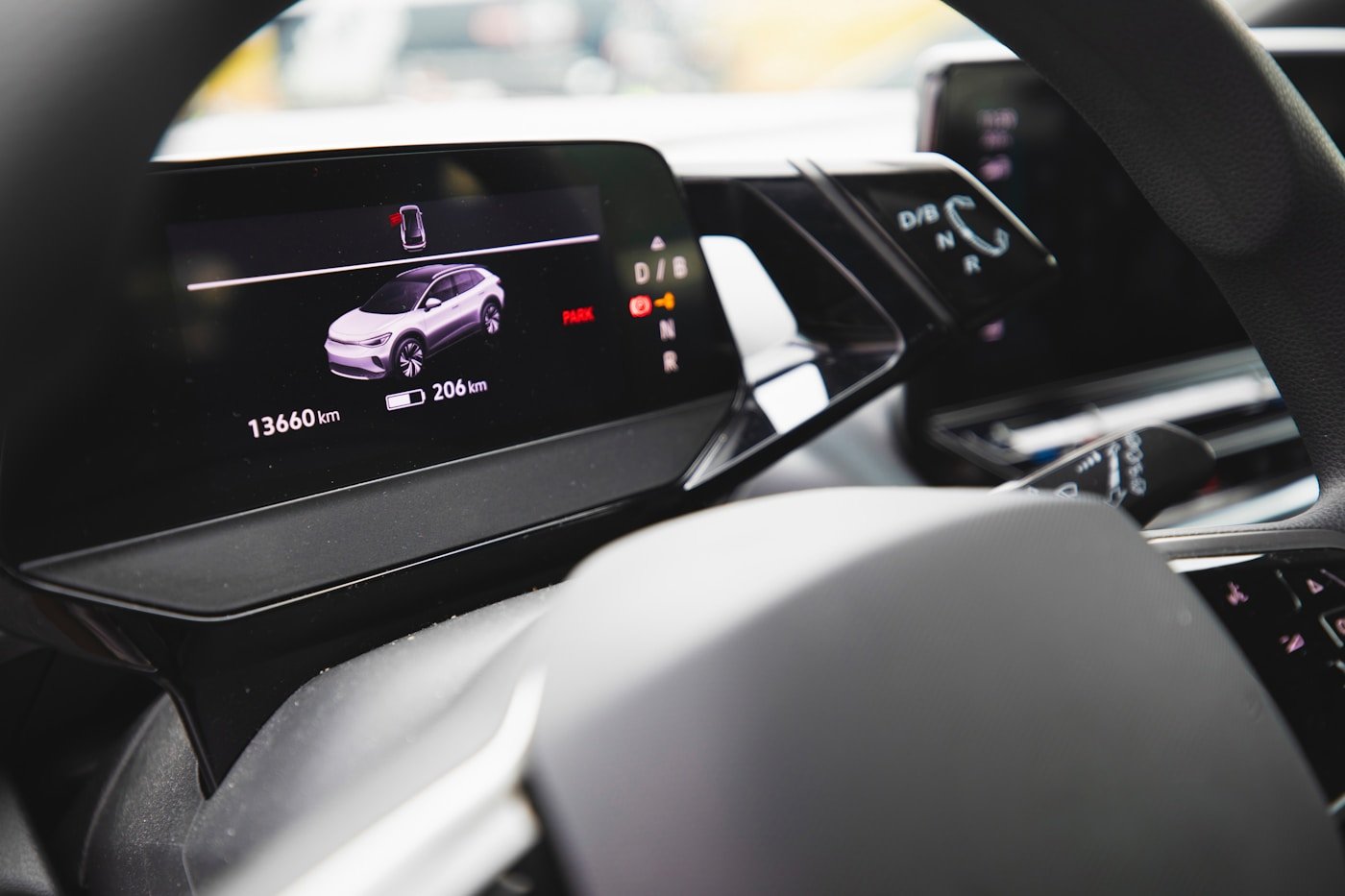
You are cruising along with a nice comfortable battery percentage, then you glance at the dash and see a smaller range number than you expected. Suddenly it feels like the car has eaten 20 km while you were not looking. Bit rude, honestly.
But that number is not a promise stamped by the battery gods. It is an estimate. More like a weather forecast for your next few miles: useful, usually sensible, but very capable of changing when wind, hills, speed or your right foot get involved.
Most EVs calculate remaining range from the energy left in the pack plus an assumed consumption rate. Some lean heavily on an official test-cycle figure; others learn from your recent driving. Either way, the car cannot fully know whether you are about to drive gently through town or do 125 km/h into a headwind with the cabin heater working overtime.
The 20-second version
- Battery percentage tells you what is left.
- Range in km or miles is the car’s best guess about how far that energy may go.
- Your route, speed, weather and climate use can change that guess very quickly.
Why the number moves even when the battery is healthy
A quick example: you leave a city at 80%, where traffic has been slow and regenerative braking has helped a lot. Then you hit a fast motorway, turn on the AC, and climb for 30 minutes. Your battery did not suddenly become bad. The car has simply realised your next kilometres are going to cost more energy than the last ones did.
Tesla’s current Model 3 manual is unusually clear about this: its displayed range is based on EPA-rated consumption and may not reflect your driving pattern or outside conditions. It also lists speed, hot or cold weather, cabin climate, hills, cargo, tyres and accessories such as roof racks among the things that affect energy use. Your own EV may show the maths differently, but the basic reality is the same.
The five things that mess with EV range the most
| What changed? | Why the estimate reacts | What to do with that info |
|---|---|---|
| Speed | Air resistance rises hard at motorway speeds. | Use route-based range, not the number you saw in town. |
| Temperature | The pack and cabin may need heating or cooling. | Precondition while plugged in when possible. |
| Hills and wind | Climbing and headwinds use extra energy. | Expect the number to dip before a downhill or calmer stretch. |
| Cabin comfort | Heat, AC and demisting all need power. | Use seat or steering-wheel heat first if your car has it. |
| Tyres and cargo | Low pressure, roof boxes and heavy loads raise consumption. | Check pressures and remove roof gear when you do not need it. |
That is why an EV can look brilliant on your normal commute and then feel a bit dramatic on a winter road trip. It is not lying exactly. It is trying to predict a moving target.
Also, do not confuse a falling range estimate with battery degradation. Degradation is a gradual change in usable battery capacity over time. A range estimate can move 20 or 30 km on one day because you drove faster, it got colder, or you just did three short trips with a warm cabin each time. Very different things.
Which number should you trust on a trip?
For local driving, battery percentage is usually the calmer thing to watch. You know your routine. You know whether 45% gets you home with room to spare. Staring at a constantly shifting distance estimate on a random Tuesday is mostly a fun way to create anxiety for yourself.
For a longer trip, trust the car’s route planner or a respected EV route-planning app more than the big headline range number. Navigation can account for distance, elevation, planned charging stops and, on some cars, current consumption. Tesla’s manual, for example, says its Trip Planner routes through charging stops to minimise drive-and-charge time where the feature is available.
A better way to read your dashboard
- At the start of a trip: Check the battery percentage and destination arrival percentage.
- After 20–30 minutes: See whether the arrival prediction is holding steady, improving, or dropping.
- If it is dropping: Reduce speed a little, check climate settings, and look at the next charger. No panic, just adjust early.
- Near your destination: Leave a real buffer. Ten percent is a nicer feeling than arriving with a heroic 1% screenshot.
This works because some range numbers can be conservative at times, while others can be optimistic. On a trip, the useful number is the energy your car expects to have when you arrive at the next suitable charger.
What about regenerative braking?
Regen is great, especially in stop-start traffic and on descents, but it is not a tiny electricity factory that makes hills free. It recovers some energy when the car slows down; it cannot recover all the energy you used climbing or accelerating in the first place. A downhill may improve the estimate, yes. A big mountain road still needs a plan.
One more little surprise: regenerative braking can be limited when the battery is cold or already very full. Tesla states this directly in its current manual, and your own EV can have similar protection behaviour in some conditions. That is why a fresh 100% charge on a cold morning can feel different from a warm battery at 65%.
Quick reader question
What makes your EV range estimate change the most?
- Cold or hot weather
- Motorway speed
- Hills or wind
- Cabin heating or AC
- I honestly never check it
This is a conversation prompt, not a recorded site poll. Drop your answer in the comments and compare notes with other drivers.
The simple takeaway
Range anxiety gets easier once you stop treating one dashboard number as the whole truth. Watch percentage for everyday life. Watch arrival percentage and route planning on longer drives. Learn what your own car does in the cold, at motorway speeds and with the cabin running.
And when you notice a range number that feels weird, do not immediately blame the battery. Check the weather, trip type, speed, tyres and accessories first. For a sensible battery-health routine, read our practical EV battery care guide. Planning a first big journey soon? This first EV road-trip lessons article may save you from an unnecessary 2 AM charging-station meltdown.
FAQ
Is lower displayed range always a sign of battery degradation?
No. A one-day or one-trip drop is often caused by driving conditions, temperature, speed, climate use, elevation, tyres or cargo. Look for a long-term trend in comparable conditions before drawing conclusions.
Should I drive by percentage or kilometres or miles remaining?
For daily driving, percentage is often simpler. For trips, combine battery percentage with the arrival estimate from your car’s navigation or a route planner.
Can slowing down help if I am worried about reaching a charger?
Usually, yes. A modest reduction in speed can make a meaningful difference because air resistance rises quickly at higher speeds. Make the change early, safely, and use your route planner to find the next suitable charger.
Sources: Tesla Model 3 Owner’s Manual: Getting Maximum Range; Tesla Model 3 Owner’s Manual: Braking and Stopping. Vehicle features and guidance vary by make, model and market; always check your own owner’s manual.